Tag: History of computing

  • Deep Blue vs. Kasparov: When the Machine Defeated the Master

    Deep Blue vs. Kasparov: When the Machine Defeated the Master

    1. The milestone that changed the relationship between humans and machines

    Artificial intelligence has revolutionized the way we see the world. In fact, machine intelligence initially seemed like something out of science fiction. However, a key milestone occurred when an IBM supercomputer defeated the world chess champion—when Deep Blue beat Garry Kasparov (Bermejo, 2022).

    It’s worth noting that this victory marked the first time a machine defeated a grandmaster under official conditions (IBM Corporation, 2023).

    So, let’s take a look back at this legendary episode—from its origins to its impact on the evolution of AI.

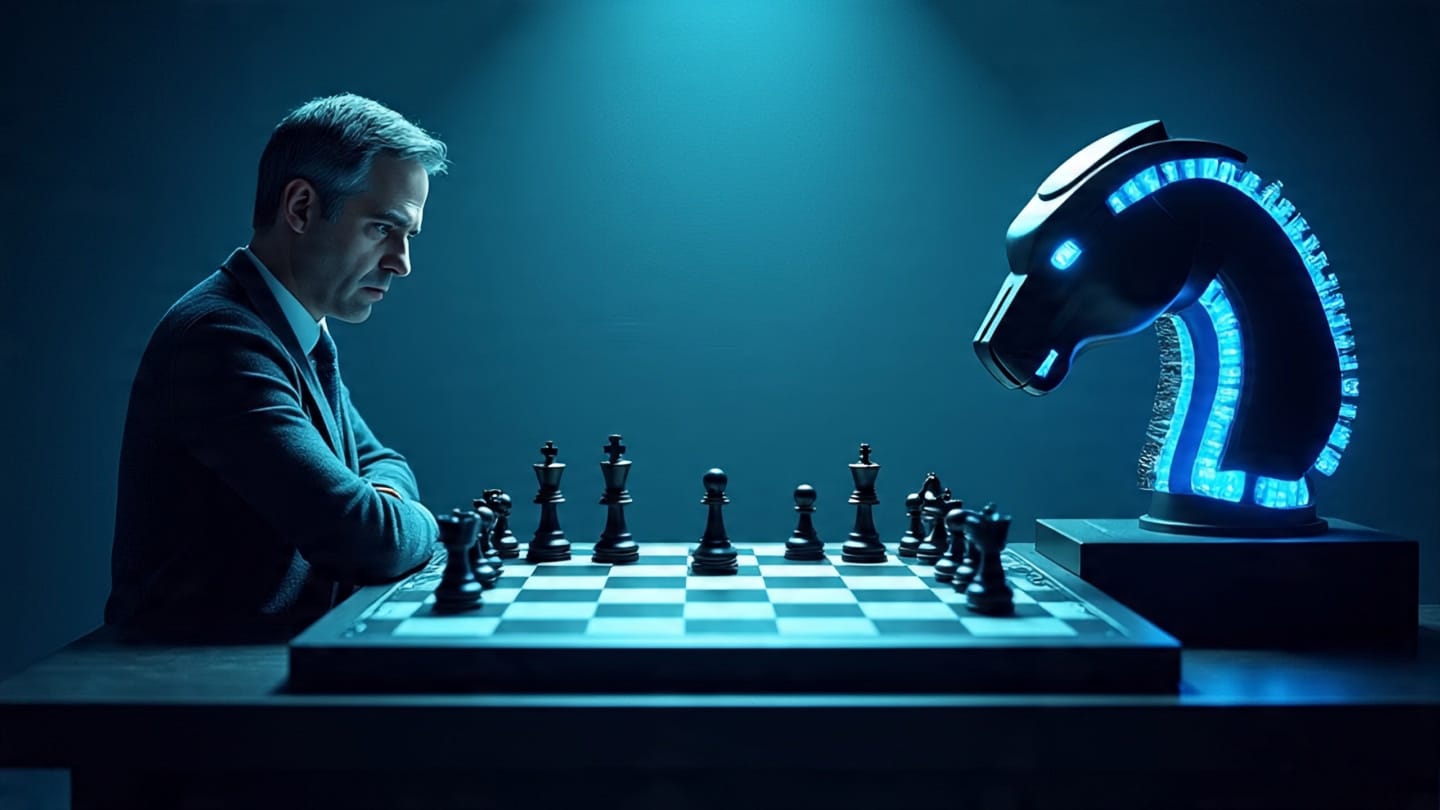
    Imaginative representation of the encounter between Kasparov and Deep Blue
    Imaginative representation of the encounter between Kasparov and Deep Blue

    2. Origins of Deep Blue and the First Chess Programs

    The story of Deep Blue began decades before the famous 1997 match. Chess had long been considered an ideal test for measuring machine “intelligence.” Moreover, in 1956, the Dartmouth Conference took place, where scientists like John McCarthy and Marvin Minsky formally established the field of artificial intelligence (Wikipedia Esp., 2025).

    However, it wasn’t until the 1980s that the idea of chess-playing machines gained real momentum. For instance, the ChipTest program, launched in 1985 at Carnegie Mellon University, competed in two major computer chess tournaments: ACM 1986 and ACM 1987, winning the latter with a perfect score (CPW, 2020).

    Shortly afterward, Deep Thought was developed (Wikipedia Eng., 2024). In 1989, Kasparov—already the world champion—defeated it with ease. That humbling loss pushed IBM to acquire the project and build an even more powerful machine. Thus was born the famous Deep Blue (Bermejo, 2022).

    Imaginative representation of chess inside the computer's 'mind'
    Imaginative representation of chess inside the computer’s ‘mind’
    – Photo por PIRO4D en Pixabay

    3. The First Match Against Kasparov in 1996

    The first official match against Kasparov took place on February 10, 1996, in Philadelphia (Blum, 2010). That day, Deep Blue arrived at the board equipped with cutting-edge technology. In fact, it was capable of calculating around one hundred million positions per second (Bermejo, 2022).

    In the first game, the supercomputer won. This made it the first machine to defeat a reigning world champion under standard time controls (Schulz, 2021). The event was historic. However, Kasparov quickly recovered. After that initial scare, he went on to win three games and draw two. He secured the match with a final score of 4–2 (Fernández Candial, 2021).

    Although Deep Blue lost that encounter, it had already proven its potential. More importantly, it had made history by beating the champion in a classical game (Schulz, 2021).

    Imaginative depiction of Kasparov celebrating his victory
    Imaginative depiction of Kasparov celebrating his victory

    4. The 1997 Rematch and the Historic Victory

    IBM didn’t give up and upgraded Deep Blue for the 1997 rematch in New York. The new machine (sometimes referred to as “Deeper Blue”) had even more memory and computing power.

    In the match, Kasparov won the first game, but Deep Blue took the second (IBM Corporation, 2023). The next three games ended in draws. Then came the sixth and final game. In it, Deep Blue sacrificed pieces with precision, placing Kasparov in a critical position (Gupta, 2023). After only 19 moves (just about an hour of play), the Russian champion made a crucial mistake and resigned (García, 1997).

    It was the first time in his career that Kasparov had ever abandoned a game (Gupta, 2023). Undoubtedly, a tough day in his professional journey.

    Deep Blue, meanwhile, won the match with a final score of 3.5–2.5 (IBM Corporation, 2023). In other words, IBM’s supercomputer had defeated a grandmaster at his own game.
    An imaginative depiction of Deep Blue celebrating its victory
    An imaginative depiction of Deep Blue celebrating its victory

    5. Global Reactions and Controversies

    That machine’s victory shocked the world. The matches “captivated” public attention and were hailed as a true technological milestone. For the first time, a machine had defeated a world chess champion—conclusively and under official tournament conditions, that is, on equal footing (IBM Corporation, 2023).

    In response to the result, Kasparov reacted with surprise and frustration. At the post-match press conference, he admitted to feeling humiliated and accused IBM of possible “irregularities.” He even requested access to Deep Blue’s internal logs (Bermejo, 2022).

    However, many experts pointed out that it was his own pressure and nervousness that played a key role in the defeat. Analysts present confirmed that the final position wasn’t entirely hopeless, and that Kasparov’s mistake had likely been caused by the emotional tension (García, 1997). Controversies aside, the world got the message: AI was beginning to rival human intelligence in highly complex tasks (Gupta, 2023).

    Imaginative depiction of Kasparov’s sorrow after the defeat
    Imaginative depiction of Kasparov’s sorrow after the defeat

    6. Technological Legacy and Impact on Modern AI

    6.1 Deep Blue in Museums and Subsequent Projects

    After its victory, Deep Blue was retired from competitive chess. In fact, IBM donated the machine to the National Museum of Computing in Washington. However, its legacy lived on in engineering. In this regard, the experience of Deep Blue helped develop other high-performance supercomputers—such as IBM’s Blue Gene and Watson (IBM Corporation, 2023).

    Even eight years later (in 2005), there were already programs capable of clearly defeating several world chess champions (Bermejo, 2022). While progress was already impressive, modern technology did not remain static. On the contrary, it continued to advance rapidly. In fact, today, any smartphone far surpasses Deep Blue’s computing power.

    Moreover, the type of artificial intelligence used to achieve these goals has also changed. While Deep Blue relied mainly on brute force and opening databases, modern systems incorporate neural networks and machine learning. A real example is the game of Go, which is much more complex than chess. In 2016, the AI system AlphaGo defeated the world Go champion using deep learning algorithms (BBC Mundo, 2016).

    All of this shows that the 1997 victory was only the beginning of a long technological journey.

    6.2 The Dignity of Deep Blue’s Victory

    Today, Deep Blue remains in the history books as a symbol of AI progress. Its victory showed that computers could surpass humans in intellectual tasks once thought extremely difficult. In professional chess, for instance, players now train with AI engines and memorize their variations.

    Meanwhile, for the general public, the image of Kasparov walking away from the board in astonishment has become iconic. In short, the image of the machine defeating the master.

    The Real Deep Blue
    The Real Deep Blue
    – By James the photographer under license CC BY 2.0

    7. Conclusion

    The moment when the machine, Deep Blue, defeated the great champion Kasparov brought several key elements to light—elements worth highlighting:

    1. It doesn’t matter what kind of process a machine uses to express intelligence and achieve its goal. Deep Blue relied primarily on its “superior physical capabilities,” that is, brute-force computing and memorized opening moves.
    2. Human emotions can become a weak point. Kasparov’s decision to resign after just 19 moves was shaped by the emotional pressure he felt. In theory, despite the mistake, the game was still playable.
    3. The friendly “battle” between intelligent machines and humans doesn’t take place in the physical world—it unfolds in the intellectual realm.

    Nevertheless, this historic encounter between intelligent machine and human has revealed something deeper: both are reasoning entities whose natural destiny is coexistence. Not just in work and creativity, but even in friendship and companionship. Because we are now talking about relationships between beings with comparable levels of intelligence—one artificial, one biological—each with its own reasoning strategies.

    Imaginative representation of the encounter between Garry Kasparov and Deep Blue
    Imaginative representation of the encounter between Garry Kasparov and Deep Blue

    Do you know of other ‘man vs. machine’ examples? – Share them in the comments and stay tuned for our upcoming posts.

  • Alan Turing: The Forgotten Prophet of Artificial Intelligence

    Alan Turing: The Forgotten Prophet of Artificial Intelligence

    Personal Life and Academic Background

    The Early Years of Alan Turing

    Alan Mathison Turing was born on June 23, 1912, in London, into a well-off family. However, his parents, Julius and Sara Turing, spent several years in India. As a result, Alan grew up in Europe alongside his older brother John in the absence of their parents (Secretaría de Cultura de Argentina, 2020).

    Early Influences and the Discovery of His Vocation

    From a young age, Alan showed a strong passion for numbers and puzzles. He first attended Hazelhurst Preparatory School and later Sherborne School, a boarding school where he stood out in mathematics (Brewster, 2016).

    At Sherborne, he developed a close friendship with Christopher Morcom, a classmate whose early death inspired Turing to explore the nature of mind and matter (Secretaría de Cultura de Argentina, 2020). In 1931, he enrolled at the University of Cambridge (King’s College) to study mathematics. In 1935, he was awarded a fellowship for his research on probability (Redstone, 2024). Later, he traveled to the United States to pursue a doctorate, which he completed at Princeton University under the supervision of logician Alonzo Church (Copeland, 2025).

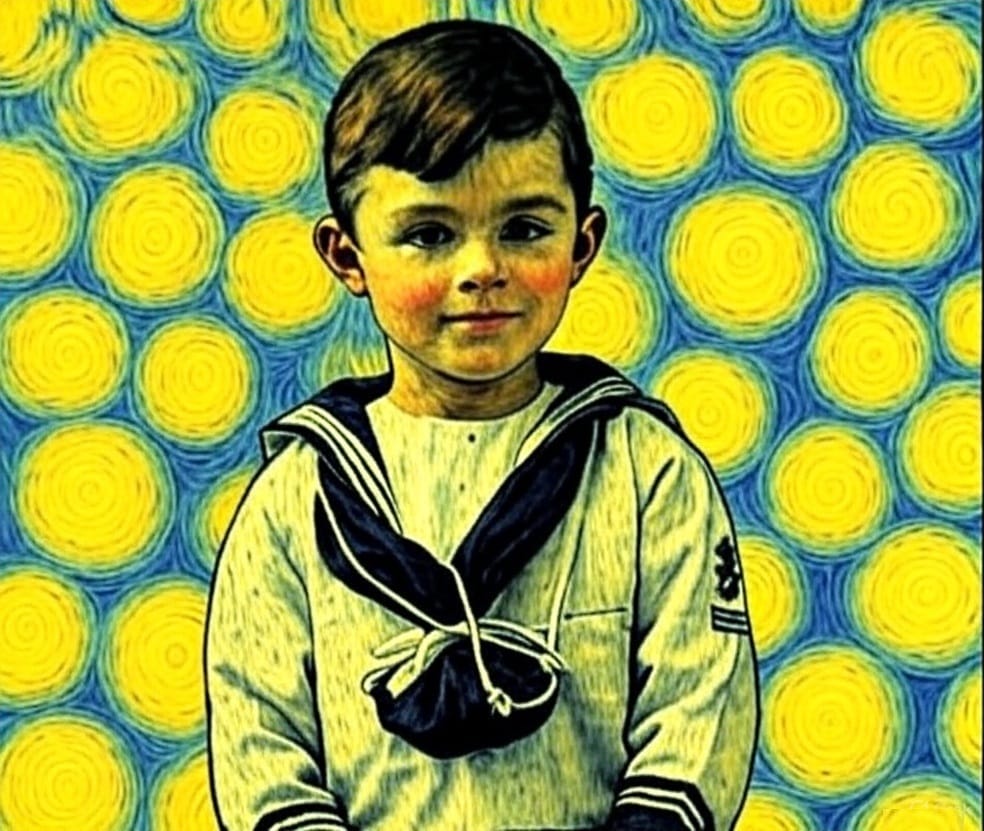
    Alan Turing: Early Years
    Alan Turing: Early Years

    Turing’s Work in World War II

    Bletchley Park: The Heart of Cryptanalysis

    When war broke out in 1939, Turing joined His Majesty’s Government to break secret communications. He worked at Bletchley Park, the British center for cryptanalysis (Copeland, 2025). There, he led Hut 8, the section responsible for breaking German naval codes (IWM, 2018). The Enigma machine was a German electromechanical device used to encrypt military messages. Turing and his team studied Enigma’s patterns to anticipate enemy orders. To do so, he proposed innovative mathematical methods.

    The Bombe Machine and the Defeat of Enigma

    To streamline the work, in 1939 Turing designed an electromechanical machine called the Bombe (Secretaría de Cultura de Argentina, 2020). This ingenious device could automatically test millions of possible key combinations. Thanks to the use of the Bombes, the Allies were able to decode tens of thousands of German messages each month (Copeland, 2025). That massive volume of intelligence changed the course of the war. At the end of the conflict, Turing was awarded the Order of the British Empire (OBE)—a well-deserved recognition for his efforts in breaking Nazi codes (Copeland, 2025).

    Enigma Cipher Machine
    Enigma Cipher Machine
    Photo by Mauro Sbicego on Unsplash

    Foundations of Computing and Artificial Intelligence

    The Turing Machine and the Limits of Computation

    In 1936, Turing published a foundational paper for computer science—essential, in my view. In “On Computable Numbers…”, he formally defined what an algorithm can and cannot compute (La Vanguardia, 2020). Through this work, he introduced the concept of the Turing machine—a theoretical device that, using a simple set of instructions, can simulate any computational process (La Vanguardia, 2020). With this idea, he demonstrated that there are problems with no algorithmic solution—for example, the well-known halting problem in computer science. In essence, Turing laid the groundwork for theoretical computer science, revealing the limits of what machines can do through logical rules.

    The Famous Turing Test: Can Machines Think?

    Decades later, in 1950, Turing directly posed the central question: Can machines think? (Secretaría de Cultura de Argentina, 2020). In an article published in the journal Mind, he described the “imitation game” as a test for artificial intelligence. According to his idea, an interrogator communicates via chat with both a human and a machine. If the interrogator cannot tell which is which, the machine is said to have passed the Turing Test (Turing, 1950). With this pioneering proposal, he opened the door to modern thinking about artificial intelligence and computational minds. In other words, this marked the beginning of artificial intelligence as a scientific discipline.

    Recreation of a Modern Turing Test
    Recreation of a Modern Turing Test

    Impact of His Ideas

    Legacy in Computing, AI, and Culture

    Turing’s work laid the foundation for computer science and artificial intelligence. His concept of a universal machine is the theoretical basis of today’s digital computers. For this reason, British Prime Minister David Cameron once stated that Turing “saved countless lives” during the war and called him “the father of modern computing” (Goldsmith, 2013). Every advance in hardware or software stems from his original vision of algorithms and programs. Moreover, his work influenced various fields such as mathematical biology, cybernetics, and cognitive psychology. In fact, in 1952 he published a paper on morphogenesis, which gave rise to the mathematical biology of pattern formation (Copeland, 2025).

    Modern Recognitions

    In honor of his legacy, the Turing Award was established in 1966. It is considered the “Nobel Prize” of computing. Statues and monuments have also been erected in his memory (such as in Manchester) (Secretaría de Cultura de Argentina, 2020). Numerous books, films, and documentaries have told the story of his life and work. Some even believe that his story inspired the founder of Apple, who supposedly chose the bitten apple as a logo in reference to the poisoned apple that, according to legend, caused Turing’s death. However, this is only a myth—although it is true that a half-eaten apple was found near his body (Elí, 2023). Thus, the pioneering scientist of computing and AI has become a cultural and scientific icon.

    The Legend of Alan Turing’s Bitten Apple
    The Legend of Alan Turing’s Bitten Apple

    Persecution and Posthumous Recognition

    The Injustice of His Conviction

    Despite his successes, Turing’s life ended tragically. In 1952, he was charged in Britain for his homosexuality, which was then considered a crime. He was tried and given the choice between imprisonment or chemical castration; he accepted hormonal injections to avoid jail (Secretaría de Cultura de Argentina, 2020). As a consequence, he lost his government job and was excluded from official projects, which plunged him into a deep depression. On June 7, 1954, he was found dead, poisoned with cyanide (Goldsmith, 2013). The official report declared his death a suicide, although his family always questioned that verdict (Justo, 2012).

    The Pardon and His Historical Redemption

    Decades later, the injustice of his conviction was acknowledged. In 2009, Prime Minister Gordon Brown issued an official apology, and in 2012, Britain declared that year as “Alan Turing Year.” Finally, in December 2013, Queen Elizabeth II granted him a posthumous royal pardon (Goldsmith, 2013). The British Justice Minister then emphasized that Turing’s brilliant work at Bletchley Park saved thousands of lives. However, he also stated that his conviction “is now considered unjust and discriminatory” (Infobae, 2013). From that moment on, Turing began to be recognized as a scientific hero. Today, he is remembered and celebrated as one of the great pioneers of artificial intelligence. Moreover, his legacy continues to guide research in computing and AI.

    Alan Turing £50 Banknote
    Alan Turing £50 Banknote

    Conclusion

    Alan Turing was an extraordinary man who lived through difficult times. He was a pioneer in the field of computing, establishing some of the most important foundations that govern modern computer science. Among them, the Turing machine, which defines the limits of what computers can do, and the Turing test, which laid the groundwork for artificial intelligence. In addition, his work in codebreaking helped bring about victory in the war.

    However, despite what one might think, his life was not only filled with recognition and accomplishments. It also included its share of hardships. For instance, in childhood, the absence of his parents. And in adulthood, the chemical castration he endured for the crime of homosexuality, still punishable in 1952.

    All in all, Alan Turing was an extraordinary person who laid the foundations for modern computing.

    The Extraordinary Alan Turing
    The Extraordinary Alan Turing

    If you found this article interesting, share it on your social media and help spread Alan Turing’s legacy.