
- 1. Introduction: between conversation, identity, and action
- 2. What Is an AI-Based Synthetic Assistant?
- 3. Agenticness in a Synthetic Assistant is a capability, not a requirement
- 4. Building a Synthetic Assistant requires two worlds
- 5. Four Synthetic Assistants currently in operation
- 6. Conclusion
- References
1. Introduction: between conversation, identity, and action
1.1 Beginning to converse
Conversation between humans and computers did not begin with today’s artificial intelligence models. Back in 1966, Joseph Weizenbaum introduced ELIZA, a program capable of maintaining certain forms of conversation through natural language. That system was far more limited than today’s platforms. Even so, it showed that a computer could participate in a linguistic exchange that a person might interpret as dialogue (Weizenbaum, 1966).
Since then, different terms have emerged to refer to computer programs that interact with humans through natural language. To name a few, there are: chatbot, dialogue system, conversational agent, virtual assistant, AI assistant, AI companion, AI agent, etc. These terms, however, do not always designate categories with strictly defined scopes and limitations. In practice, different conversational systems may share capabilities and receive different names depending on their function, design, or context of use (Wahde & Virgolin, 2022; Wang et al., 2023).
Conversational agents, meanwhile, have long been used as assistants capable of answering questions and helping with certain tasks. Yet the experience offered by these systems has not always matched users’ expectations. Luger and Sellen (2016) identified a gap between what people expected from these assistants and what they could actually do. Among the areas they proposed exploring were a reassessment of the role of humor in interaction and better ways to reveal system capabilities through conversation itself. These concerns suggest that the usefulness of a conversational system depends not only on its capabilities, but also on how it presents itself and interacts with the user.

1.2 Conversation and identity
The emergence of more advanced generative systems has added new possibilities. However, they come with a default personality that often fails to connect with the user. Fortunately, a modern conversational agent can be given a particular personality, a way of expressing itself, and specialized knowledge. In fact, experiments such as CloChat have shown that adapting an agent’s self (agent persona as the authors of the experiment call it) can significantly affect the richness of conversations, user interest, and the sense of connection with the system (Ha et al., 2024).
Other work has gone even further. So-called generative agents have integrated memory, reflection, and planning to produce entities capable of simulating believable human behavior within virtual environments where they carry out activities and interact with other agents (Park et al., 2023). Nevertheless, these advances do not eliminate other problems. Research has also identified that a self assigned to a conversational system can lose coherence during prolonged interactions, a phenomenon known as identity drift (identity drift ) (Choi et al., 2025).
There is also another clearly distinct line of work: companion chatbots. Their main purpose is not necessarily to help accomplish a specific task, but to sustain social or affective interaction. Studies of these systems show that users can develop ongoing relationships with them and perceive them as social companions (Skjuve et al., 2021).

1.3 Conversation and action
Finally, today’s AI agents emphasize another characteristic: the ability to act. OpenAI, for example, describes an agent as a system capable of independently accomplishing tasks on behalf of the user by using tools and executing multi-step workflows (OpenAI, 2025).

We therefore have different concepts that emphasize different properties: conversing, responding, providing companionship, having a personality, pursuing goals, and so on.
In this context, it is useful to introduce the concept that motivates this article.
2. What Is an AI-Based Synthetic Assistant?
In this article, we will use Synthetic Assistant as a shortened form of AI-Based Synthetic Assistant to describe a particular way of constructing specific instances of conversational systems.
This does not propose a new technology. Nor does it establish a specific technical architecture that must be used to develop them. But it does establish a formula.
A Synthetic Assistant can be constructed from three components:
Synthetic Assistant = AI-based conversational brain + literary construction + collaborative purpose
An AI-Based Synthetic Assistant is a conversational entity built on an artificial intelligence platform, endowed through literary writing resources with a coherent identity, personality, history, and memories, and specifically designed to collaborate with its user within a certain range of activities or areas of knowledge.
The expression AI-Based is deliberately broad because it does not require a specific implementation of the mechanism that sustains its conversational capabilities.
Today, many implementations might use large language models (LLMs). However, tying the definition to LLMs would turn a general idea into a description dependent on the technology dominant at a particular moment in the history of artificial intelligence.
Better still, the concept does not depend on using RAG, a vector database, an agent system, knowledge files, or a specific memory architecture.
All of that belongs to the how.
Here, however, only the what.

2.1 The conversational brain
The first component of a Synthetic Assistant is an artificial intelligence platform capable of functioning as a conversational brain.
It is also important to understand that we cannot impose an identity on the platform as a whole. As a large shared brain, the platform cannot have one particular identity, because each user may have different communication needs. The Synthetic Assistant exists in the specific instance that interacts with the user.
The role of the underlying artificial intelligence platform is to enable the assistant to understand sufficiently what the user expresses, maintain the necessary context, use relevant knowledge, and produce coherent responses.
The internal way in which it achieves these capabilities is not part of the definition.
One platform may retrieve information from files. Another may have persistent memory. Another may consult external systems. Better still, some may be able to perform actions, use tools, work with images, or hold voice conversations. The possibilities could be endless as technology advances.
These differences in capabilities will affect what a Synthetic Assistant can do and how well it can sustain its identity. However, no particular combination of these technologies defines the concept.
This also allows the Synthetic Assistant to survive as a concept through technological change.
If, some years from now, conversational systems no longer depend mainly on today’s LLMs and different architectures emerge, it would still be possible to build Synthetic Assistants on top of them.
What is needed is the conversational brain, not a specific implementation of that brain.

2.2 Literature and the construction of identity
The second component of this construction belongs to a different territory: literature.
An AI platform can provide an excellent capacity for conversation and still fail to represent anyone in particular.
To build a Synthetic Assistant, it is necessary to define who it is.
This involves working with elements similar to those used to construct literary characters: history, personality, relationships, memories, tastes, preferences, previous experiences, ways of expressing oneself, and certain behavioral characteristics.
It is not simply a matter of instructing the system to be “kind,” “friendly,” or “formal.”
An assistant with a developed identity must have enough elements to speak about itself coherently and maintain continuity of self across different conversations.
That does not mean it must repeat an anecdote using exactly the same words. People do not do that either.
Continuity means that the essential facts remain sufficiently stable. A personal story can be told in different ways without becoming a completely different story every time.
Thus, literary construction functions as a set of identity anchors. It is the platform that must be able to use those anchors when they are relevant.
This relationship can be summarized simply through the following metaphor regarding Synthetic Assistants:
The AI platform gives them a brain; literature gives them a soul.
This second component also explains why a Synthetic Assistant does not have to represent a human being by default. It can also be constructed as a gynoid, a reptilian, a blood elf, or any other entity capable of sustaining a coherent identity.
Naturalness does not necessarily imply humanity either; it simply implies being. Because a Synthetic Assistant should, above all, resemble itself.

2.3 Being synthetic is not enough: it must also be an assistant
An elaborate personality and a coherent history can produce an excellent conversational character. However, that is still not enough to speak of a Synthetic Assistant .
The word _ assistant _ introduces an additional condition: there must be a real collaborative function. A Synthetic Assistant must be able to help a person achieve goals within a particular field. It may teach a language, help interpret literature, provide technical support, guide research, support an educational process, or collaborate in professional activities. This condition distinguishes the concept from a character whose primary purpose is simply to converse.
A chatbot built as a friend, virtual partner, or entertainment character may have a personality, memories, and an elaborate history. That does not automatically make it a Synthetic Assistant. It could also become an assistant if, in addition to that social dimension, it were capable of effectively collaborating on defined tasks.
Therefore, to summarize:
Literary construction determines who one is. The collaborative function determines what one is for.

3. Agenticness in a Synthetic Assistant is a capability, not a requirement
It is also useful to distinguish a Synthetic Assistant from an AI agent.
An agent is generally characterized by some degree of autonomy in pursuing goals, using tools, making intermediate decisions, and carrying out actions. A Synthetic Assistant does not need to operate that way. It may remain available until the user consults it, exactly as many human assistants do. If someone asks a question, requests help, or assigns a task, the assistant responds and collaborates. Nothing prevents it, however, from being given agentic capabilities. That does not destroy its nature as an assistant.
A Synthetic Assistant could consult external systems, perform actions, plan certain steps, or complete tasks with greater autonomy when the platform allows it.
There may be primarily conversational Synthetic Assistants and others with a high degree of agentic behavior. Both clearly belong to the same category.
For this reason, agenticness should be considered an independent, nonessential capability.

4. Building a Synthetic Assistant requires two worlds
At this point, we can say that the main components of the Synthetic Assistant formula require an unusual combination of skills to build them.
On the one hand, sufficient knowledge of artificial intelligence is needed to configure a conversational platform and provide the assistant with the capabilities required to fulfill its function; on the other hand, writing ability is needed to construct a consistent identity. One part creates capability and the other creates identity.
A technically sophisticated system without good narrative construction may be extraordinarily competent and, at the same time, feel generic. Conversely, a magnificent story is of little use if the platform supporting it is unable to collaborate effectively.
For this reason, the profile needed to develop Synthetic Assistants lies at the intersection of two seemingly distant fields: artificial intelligence and writing.
Put less academically, it looks quite a bit like an AI programmer who is also a writer.
Or, to reduce it even further, a geek who writes coherent stories with plenty of imagination.

5. Four Synthetic Assistants currently in operation
The idea of Synthetic Assistants is not currently limited to a conceptual proposal. Four implementations are already being used in projects developed around this form of construction. An initial general-audience introduction to these assistants was previously published on the author’s personal blog (Morales Barroso, 2026c).
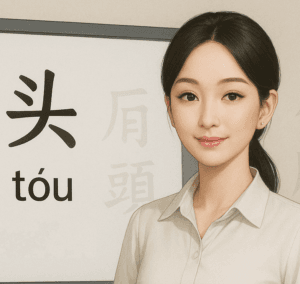
5.1 苏清妍 (Sū Qīngyán): teacher for Visual Chinese Vocabulary
The collection Vocabulario Chino Visual / Visual Chinese Vocabulary includes 苏清妍 (Sū Qīngyán) as its synthetic teacher.
Her main function is to reinforce learning related to the collection’s vocabularies. She can explain terms, help create exercises, and answer questions related to the materials.
But Sū Qīngyán is not constructed merely as an educational interface.
She also has a personal identity: she is a Chinese teacher from Suzhou, with a history, education, memories, and biographical elements that allow users to converse with her beyond strictly academic responses.
Current editions of Visual Chinese Vocabulary specifically include access to the virtual teacher Sū Qīngyán as part of their supplementary resources (Morales Barroso, 2026b).
5.2 Dr. Julián Cásares García: literary guide to Oneiric Poetry
In Poesía Onírica / Oneiric Poetry, the Synthetic Assistant takes on a different role.
Dr. Julián Cásares García is the literary guide for the series.
He can converse with readers about the poetry collections, discuss images and metaphors, explore possible interpretations, and generate activities such as trivia related to the works.
But, once again, his existence does not end with that function.
Julián has his own tastes, education, background, and personal history. Readers can therefore relate to him as a recognizable guide rather than merely as a tool for obtaining explanations.
The third editions of Poesía Onírica include access to him as a supplementary resource for exploring the works and their possible interpretations (Morales Barroso, 2026a).

5.3 忽思慧 (Hū Sīhuì): a private Synthetic Assistant
The third case is 忽思慧 (Hū Sīhuì), a private Synthetic Assistant created for Paola Vianey Orenday Solís, a professional in Chinese Medicine focused especially on herbal medicine and energetic diet therapy.
Unlike Sū Qīngyán and Julián Cásares, Hū Sīhuì was not conceived as a resource associated with a book collection. He is an assistant built specifically to collaborate with one particular person within her interests, activities, and projects.
His identity is that of a 60-year-old Chinese man and imperial dietitian from the Yuan dynasty. His personality is intended to convey serenity, warmth, and wisdom, occasionally accompanied by metaphors and a slight sense of mischief.
His area of collaboration is especially related to Chinese Medicine, including diet therapy and herbal medicine. However, his capabilities also include tasks such as organizing projects, developing ideas, reviewing texts, supporting outreach activities, and solving some everyday technical problems.
The proposed form of interaction with Hū Sīhuì is similar to that of a remote collaborator. Paola can provide him with context, explain her goals, and work with him progressively around her projects.
This case shows another possibility for Synthetic Assistants: they do not need to be public or intended for large numbers of users. They can also be built to collaborate privately with a specific person.

5.4 Pancho: technical support and a demonstration for the reader
The fourth case is Pancho, a Synthetic Assistant oriented toward technical support.
Pancho combines the knowledge needed to help with technological problems with a particularly recognizable identity and a distinctly jarocho personality.

Unlike Sū Qīngyán and Julián Cásares, access to him does not depend on purchasing a book.
Pancho is not presented as an open assistant that anyone would necessarily discover while browsing the Internet. However, any reader who has his link can converse with him .
For that reason, this article includes access as a small reward for those who made it this far.
Try Pancho:

[Click here to converse with Pancho]
The QR code and the link lead directly to the assistant and allow readers to experience firsthand part of what we have described throughout the article (Morales Barroso, 2025).
6. Conclusion
An AI-Based Synthetic Assistant does not claim to constitute a technology distinct from today’s conversational platforms. It is a form of construction .
Its starting point is an artificial intelligence platform capable of providing a conversational brain. On top of that capability, literature is used to construct a sufficiently rich and coherent identity. Finally, that identity is given a collaborative purpose, the component that properly makes it an assistant.
For this reason, we can return to the initial formula:
Synthetic Assistant = AI-based conversational brain + literary construction + collaborative purpose.
Meanwhile, chatbots, conversational agents, AI assistants, artificial persons, digital companions, and autonomous agents already explore different parts of this territory.
The Synthetic Assistant lies at the intersection of some of these categories, but emphasizes something in particular: it is an entity with a constructed identity that not only converses and has a life story, but is there to collaborate .
Its technological architecture may change over the years, and the platforms themselves will probably evolve. But as long as there is an artificial intelligence capable of conversation and someone capable of writing an identity around it, it will remain possible to build something recognizable, coherent, and useful—or, better still:
Someone with a technological brain, a literary soul, and a reason to be by our side.

Tell us: would you like your AI to have an identity of its own?
Why?
And if you think this article might interest someone else, share it.